Sustainability Initiatives
Our mission is to create a cleaner, quieter and more sustainable airport that respects the extraordinary natural environment of the Roaring Fork Valley. We are committed to reducing noise and air pollution, improving energy efficiency, lowering our carbon footprint, and protecting the wildlife habitat, open spaces and surroundings that make this community unique.
High-level Timeline of Sustainability Initiatives at ASE
Key Emission Reduction Efforts (to date)
- Transitioned all indoor lighting to LED
- Transitioned all outdoor lighting to LED
- Transitioned all airfield lighting to LED
- Installed occupancy sensors in some areas of the Airport Operations Center (AOC)
- 2019 energy audit
- Installed smart thermostats in Terminal and AOC
- Began to utilize on-site solar where feasible (e.g., crosswalks and parking lot lighting)
- Began transitioning fleet vehicles to electric/hybrid alternatives (in 2023 ASE purchased first alt fuel vehicle, in 2024 purchased two more)
- Installed 10 electric vehicle (EV) chargers at the AOC and two at the Terminal for employee use
- Atlantic Aviation has begun the transition to electric Ground Support Equipment (eGSE)
- Began procuring Sustainable Aviation Fuel (SAF)

ASE Air Quality Program
Watch the ASE Air Quality Study Q1 Measurements Presentation
Emissions Modeling: Use of computer modeling to quantify the amounts of emissions in a specific study area based on specific sources (i.e., buildings, Ground Support Equipment [GSE] , aircraft)
Emissions Monitoring (Field Measurement): Use of measuring equipment to identify the specific quantity of a pollutant that an individual might breathe at a specific location at a specific point in time (i.e., µ/m3 [micrograms per cubic meter – physical weight of pollutant to specific volume of air] or ppm [parts per million: ratio of pollution gas molecules to total molecules of air])
Emission Reduction Action Plan (ERAP): Plan for implementing emission reduction measures within operations, facilities, management, policy, capital, and development for Aspen/Pitkin County Airport.
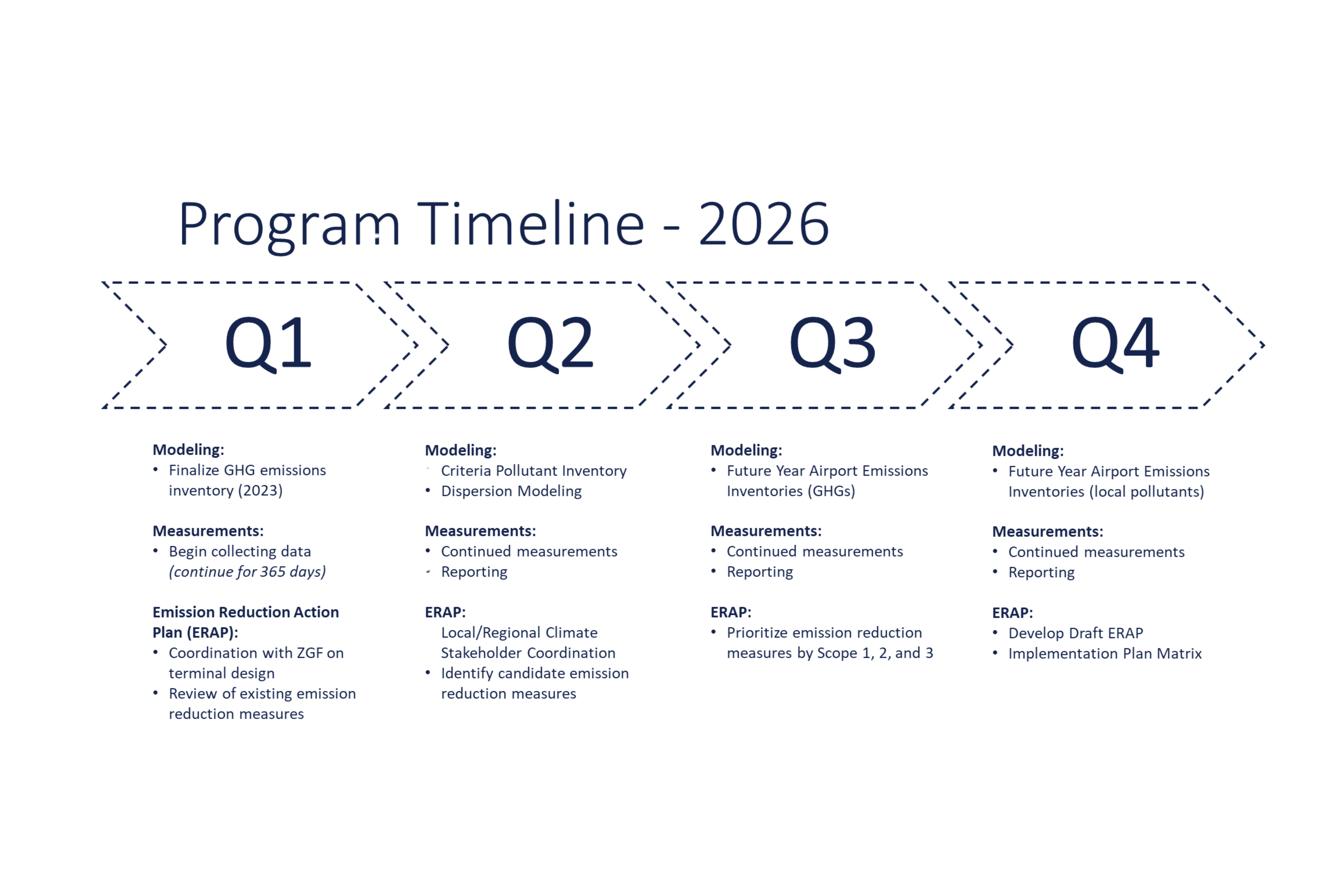
Air Quality Study Measurements will be presented during Airport Advisory Board meetings. (All dates are subject to change)
Q1: April 1 to July 1 was presented during the August 20, 2026 AAB meeting.
Q2: July 1 to October 1 is expected to be presented during the November 19, 2026 AAB meeting.
Q3: October 1 to January 1 is expected to be presented during the February 2027 AAB meeting.
Q4: January 1 to April 1 is expected to be presented during the May 2027 AAB meeting.